
Digital Minions: Rethinking Our Relationship with AI at Work


It’s hard to escape conversations about AI at the moment. At SXSW every third session was about AI. I’ve been in many conversations in recent weeks with organisations who are struggling to understand how and where they should best use it. And I’ve been thinking a lot about how we are feeling about AI in our work.
Most of us have been conditioned to see it as the coming overlord. The thing that will replace us, render us obsolete, make our carefully accumulated skills worthless overnight. It’s the narrative we’ve been fed, and honestly, it’s exhausting and stressful.
But what if we’ve got this wrong?
This question came up in a conversation I had with Professor Marek Kowalkiewicz for the Season 6 first episode of The Floor Plan podcast. With over 20 years teaching AI and a career spanning Microsoft China, SAP, and Silicon Valley, Marek, who is Chair of Digital Economy and a Professor at QUT, offered a refreshingly contrarian take on the whole thing.
The Minion Metaphor
You remember that moment on Jeopardy when someone lost to IBM Watson and said, “I, for one, welcome our future digital overlords”?
Marek believes that’s not what is happening here at all.
He sees AI systems as those little yellow creatures from the Minions movie. Give them a task and they’re excited to help, available 24/7, full of energy. But look away for a moment and something weird happens in their heads. They start doing those crazy, wild things.
I love this. Because it’s true, isn’t it?
We grew up with computers that gave us precise, predictable answers. Deterministic systems. You knew what you’d get. But large language models? They’re probabilistic. There’s genuine uncertainty in their outputs. They hallucinate. They make things up. They need supervision.
And we’re still learning how to work with them.
The Truth Nobody’s Talking About
What if managing AI workers doesn’t save us any time at all.
I know. We’ve all been sold the efficiency dream. Deploy these systems and watch your productivity soar. But if you’re doing it properly, if you’re applying all the checks you need to apply, it might take exactly as long as it would without them.
The difference according to Marek? The quality gets higher.
Think about the recent Deloitte incident. An AI-generated report full of inaccuracies. Even sophisticated organidations are still learning what proper checks and balances actually look like.
We’re not equipped for this yet. Most of us still think about computers as those reliable boxes that give us correct answers.
But when you’re working with systems that can confidently present fabricated information, you need a completely different approach. One built on constant verification. On questioning and critical thinking. On not just accepting what shows up on the screen.
Who’s Actually Capturing the Value?
For 50 years, automation benefits have flowed upward. CEOs got richer. Shareholders got richer. Employees? Not so much.
But something interesting is happening now and Marek’s research is picking up on the early signals of a shift.
Individual employees are figuring out how to work more efficiently with AI tools. They’re delivering the same or higher quality work in less time. But their employers often don’t know.
Some people are using that extra time to actually relax.
Others are taking on additional contract work.
The tables are turning. Finally, after all these years of economists scratching their heads about why workers weren’t capturing productivity gains, we’re seeing it happen. Person by person. Quietly.
I find this fascinating. Because it suggests that maybe, just maybe, we’re entering a period where individual capability and autonomy matter more than organisational structure. Where people can shape their own relationship with technology rather than having it dictated to them.
What Are You Really Hired to Do?
When was the last time you thought about that?
Marek calls it his “job split framework,” borrowed from Clayton Christensen’s Jobs to be Done theory.
Stop looking at your job description.
Ask yourself instead, what do people really hire me to do?
Teachers aren’t hired to grade tests and write letters to parents. They’re hired to inspire children. To help them see an exciting future. To put them on the right path.
When test grading gets automated, that’s not a threat. It’s freedom to do the real work.
The framework asks us to think about four things.
What should you hand over to AI?
What tasks are you defending because they’re crucial to your core purpose?
How can you use AI to amplify what makes you uniquely valuable?
And what new possibilities emerge now that didn’t exist before?
I spent years in corporate trying to fit into boxes that didn’t suit me. Eventually I left, got rid of the suits, and started wearing jeans to work as often as I could. I found my way to a career that lets me explore what I actually care about.
Marek’s framework resonates with me.
It’s not about fighting against AI. It’s about reimagining what your job truly is, beyond the checklist of tasks.
The Paradox We’re Ignoring
Here’s what keeps Marek up at night, and honestly, it should keep all of us up too.
We need more critical thinking now that we have these systems. But the proliferation of chatbots and large language models may actually be decreasing our ability to think critically.
We’re drowning in zero marginal cost content. It’s essentially free to generate unlimited material. But most of it just pretends to be quality.
The skill that’s becoming increasingly valuable is the ability to engage deeply with content you didn’t create. To verify. To question. To think.
Marek’s team uses large language models constantly. But they don’t treat them as time savers. They’re brainstorming partners. Co-editors. Every word, every comma gets checked. It’s about increasing quality, not reducing effort.
How many of us are doing that?
How many of us are just accepting what the screen tells us and moving on?
How Do We Actually Govern This?
Marek’s view is that regulation will always lag behind technology. That’s just how it works. You can’t regulate something that doesn’t exist yet.
So what do we do?
Build organisations that are responsible even without governance on paper. And how do we do that?
AI literacy. Technology fluency.
Many people still don’t know that ChatGPT hallucinates. They don’t realise that Google’s AI-generated search snippets can contain errors. They lack the knowledge to make informed decisions.
We need to work on this literacy within organisations. Equip every employee with enough knowledge to make responsible decisions by themselves, not through nanny rules and restrictions, but through understanding. Through capability.
Share your values. Establish what you care about. Then give people permission to make their own choices.
Marek calls it “permissionless governance.” It requires more investment upfront, in education, in building capability but it creates organisational resilience that rigid rules never could.
What Comes Next
Marek believes we’re moving toward more interconnected economies. Smaller, well-coordinated organisations rather than massive corporate empires. AI orchestrators coordinating business networks with less need for gigantic organisations that often cause more problems than they solve.
I like this vision.
Because I’ve worked in those massive organisations. I know what it’s like to be a cog in a machine that doesn’t remember your name. To spend your days in a sea of grey cubicles, pushing papers, ticking boxes, slowly losing yourself in the process.
The pandemic showed us that those structures are more fragile than we thought. It gave us a rare chance to see behind the curtain and to really look at how work is structured and the role it’s taken in our lives.
Maybe AI isn’t the threat we’ve been told it is.
Maybe it’s actually the thing that helps us break free from outdated paradigms. From busywork. From boxes that never fit properly anyway.
But only if we approach it with the right mindset.
Not as overlords to fear. Not as magic solutions to defer to. But as imperfect, enthusiastic helpers that need our supervision, our critical thinking, our humanity.
Digital minions. Not masters.
The question isn’t whether AI will transform work. It’s whether we’re ready to reimagine what work could be when we stop chasing the wrong things and start asking what we’re actually here to do.
You can listen to the full episode here or watch here.
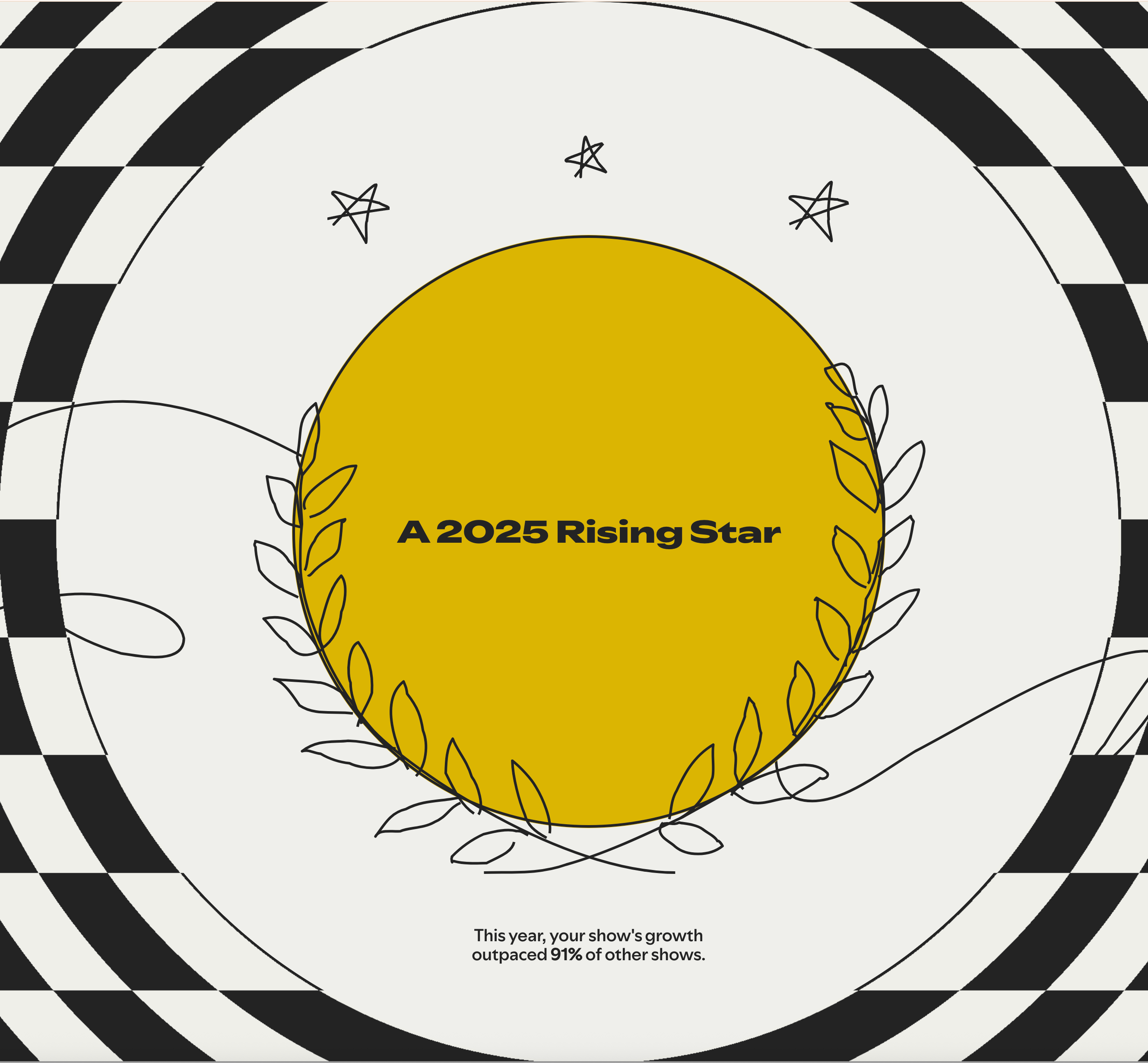
And a huge thank you to all our listeners this year, some really exciting stats from our Spotify Wrapped!
Rethink - Cards to Reimagine Work and Life
I recently spoke at the World Business Forum in Sydney, and it was fantastic to see Harvard’s Amy Edmonson speak about the need to think differently in the landscape we are now in.
The Rethink cards are an evidence-based tactile tool that open up new ways of seeing and new possibilities.
The pre-ordered cards are almost here, thank you to everyone who has ordered. I’m so excited for you to receive them!
Thank you also to the organisations who have booked me to run events and workshops for their teams and clients with the cards.
You can still order to get the first release here.
Libby x